


Beach Bliss: Merge Puzzle
4.3300.00 Reviews
App Specs
- Version
- 1.0.3
- Updated On
- License
- Free
- Downloads
- 50,000+
- Developer
- Kite Games AS
- Categories
- Puzzle
- Platform
- Android
Screenshots
 Analysis by AppCompare
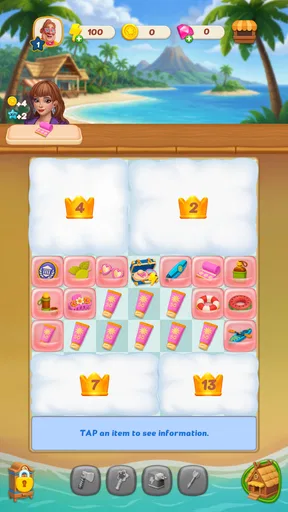
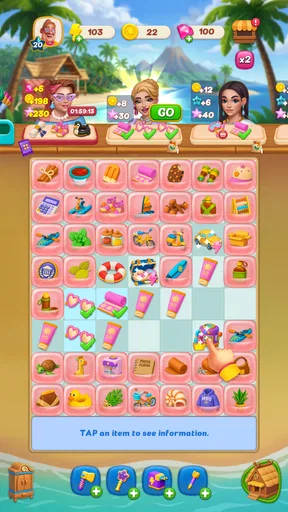
Beach Bliss: Merge Puzzle is a relaxing puzzle game built around combining matching items while giving beach settings a visual refresh. I found its appeal easy to understand: the actions are simple enough for a short break, but the makeover theme gives each merge a little more purpose than moving pieces around a board with no wider context.
That balance matters in a crowded puzzle category. Many merge games rely on increasingly large collections of objects, while others focus almost entirely on timed challenges or competitive scores. Beach Bliss takes a calmer route. Its strongest idea is the connection between satisfying combinations and visible improvement, making progress feel more personal than a bare level counter.
How the merge loop creates a sense of progress
I like how the merge loop turns scattered little decisions into a visible sense of progress, but I’d also pay attention to how the board feels as it fills. Taking a moment to check the current goal before combining pieces can help keep a quick session purposeful rather than messy. That same habit matters even more when someone else shares the device, so it’s worth thinking about whose progress and spending choices are involved.
Small goals make the opening easy to understand
My first impression was that the game is approachable because it does not ask me to master complicated controls. The central activity is merging, so the learning curve begins with recognition: identify compatible pieces, combine them, and use the result to move toward the next objective. That makes it suitable for players who want a puzzle game they can understand almost immediately.
The beach setting also gives those early goals a clear emotional tone. Instead of treating every successful move as an isolated reward, the game frames progress as part of a makeover. Even when the individual action is modest, I have a reason to care about completing it because the wider environment is meant to become more attractive and inviting.
This is particularly effective for casual players who do not want a demanding introduction. A quick session during a commute or while waiting for an appointment can begin with a straightforward target rather than a long tutorial. The trade-off is that experienced puzzle fans may find the opening deliberately gentle, especially if they prefer immediate complexity or a strict score chase.
Makeover progress gives merges a visual purpose
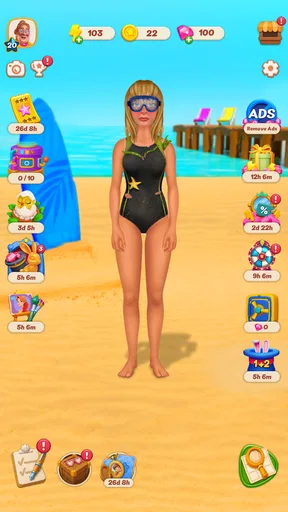
The most useful design choice is the way the setting supports the puzzle loop. In a conventional merge title, combining two objects can feel like housekeeping: clear space, create a higher item, repeat. Here, the beach theme gives that repetition a visible destination. I am not only arranging pieces; I am working toward a more polished environment.
Worth Reading Before You Choose

Flipboard Shows What News Apps Must Do Beyond the Feed

Switching to Android Auto Means Rethinking Your Driving Routine

Google Calendar Makes a Crowded Week Easier to Manage

Ludo King Makes the Most of the Minutes Between Plans

Baby Panda World Brings Quick Play to Modern Phones, but Its Game Library Feels Busy

ESPN’s Live Game View Makes Following Close Games Easier
That visual framing helps sustain interest during routine moves. It also makes the game a better fit for players who enjoy decorating or restoration themes but do not want a separate building simulator with a more complicated management layer. The makeover element is the bridge between puzzle actions and longer-term motivation.
One practical tip is to treat each session as a small planning exercise rather than tapping as quickly as possible. Before making a merge, I look at the available space and consider whether the resulting item will help the current goal or simply occupy another position. That habit reduces unnecessary clutter and makes the board easier to read when several possible combinations appear at once.
Progress signals are more satisfying when they remain visible
Beach Bliss benefits from showing progress through the state of its beach world rather than relying only on abstract rewards. A player can understand the point of continuing when the setting itself reflects completed work. This is a stronger signal than a number increasing in isolation because it connects the action to a recognizable result.
For me, that creates a useful rhythm: merge, complete a task, see the environment improve, then return to the puzzle with a new short-term reason to continue. The rhythm is not revolutionary, but it is coherent. It gives the game enough structure to support repeated sessions without making every moment feel like a test.
Players deciding whether the game is right for them should ask what kind of progress feels rewarding. If you enjoy visual restoration and gradual completion, the beach presentation adds welcome motivation. If you need a deep collection system, elaborate strategy, or highly competitive rankings to stay engaged, the makeover feedback may not be enough on its own.
Where the challenge comes from
The challenge in a merge puzzle usually comes less from reflexes and more from managing limited space and choosing the right moment to combine pieces. That makes the game accessible to people who prefer thoughtful play over fast reactions. I can pause, inspect the board, and decide whether an immediate merge is sensible or whether holding pieces will create a better chain later.
This also changes how difficulty feels. A player who rushes may create awkward arrangements, while a player who plans can make the same objectives feel much more manageable. The game therefore rewards attention without requiring the intensity of a timed arcade puzzle. Its challenge is quiet, but it is still present in the way each move affects future options.
A useful workflow is to preserve open space near the areas where new pieces are likely to matter most, rather than filling every available position. I also avoid merging merely because a pair is available. Sometimes the better choice is to wait until the combination supports an active objective. This is the kind of small decision that separates relaxed, controlled play from a board that gradually becomes difficult to manage.
The difficulty curve feels designed for short sessions
Beach Bliss is most comfortable when played in short, repeatable visits. Its basic loop does not demand that I remember a complicated set of rules after putting the phone down. I can return later, inspect the current state, and resume making decisions. That makes it a sensible companion for quiet moments rather than a game that expects a long uninterrupted sitting.
The downside is that players seeking a sharply escalating puzzle experience may find the pacing restrained. The appeal depends on enjoying gradual improvement, not on being pushed through increasingly punishing stages. In my view, that is a deliberate identity rather than a flaw, but it limits the audience. This is not the first choice I would make for a serious puzzle workout.
The best way to judge the pacing is to notice how you respond to repetition. If repeating the merge-and-improve cycle feels calming, the steady curve works in the game’s favor. If you quickly need new rules, harder restrictions, or a dramatic change in objectives, the same consistency may feel too predictable.
Retention without turning every session into pressure
The makeover theme creates a natural reason to come back: there is always an unfinished beach to improve. That kind of open-ended motivation can be effective because it does not depend entirely on winning a difficult round. Even a modest session can feel worthwhile if it contributes to a broader visual result.
At the same time, merge games can create pressure through limited space, repeated objectives, and the temptation to speed up progress. I recommend resisting the urge to treat every board as a race. The game is more enjoyable when I use its relaxed presentation as permission to plan carefully. Playing too aggressively can turn a soothing puzzle into a sequence of avoidable interruptions.
In-app purchases range from $0.99 to $99.99 per item, so spending discipline is important for anyone who wants a completely controlled budget. The game itself is free to start, which makes trying the core experience straightforward, but optional purchases can change how some players approach progression. I would set a personal limit before playing, especially if the desire to finish a makeover begins to feel stronger than the enjoyment of solving the board.
That is also why the game is better suited to adults who can manage optional spending independently or to families that have purchase controls in place. The Everyone age rating makes the presentation broadly accessible, but age suitability and spending habits are separate questions. A calm visual style does not automatically remove the need for sensible device settings.
Who will enjoy the structure most
I would recommend Beach Bliss to someone who likes casual puzzle games, beach aesthetics, and visible restoration. It works especially well for players who want a low-pressure activity with enough decision-making to avoid feeling completely passive. The free entry point also makes it easy to test whether the merge rhythm matches your taste before committing more time.
It is less suitable for someone looking for a story-heavy adventure, a competitive leaderboard experience, or a puzzle game built around strict time limits. Players who dislike repeated combining and gradual visual rewards may also lose interest, even if they appreciate the setting. The game’s identity is narrow in a good way: it knows that its pleasure comes from accumulation and improvement rather than dramatic variety.
Compared with a traditional match-three game, the experience feels slower and more spatial. Match-three titles often reward quick pattern recognition and immediate board clearing; Beach Bliss asks me to think about what a merge creates and how that result fits into the available space. Compared with a pure decorating game, it places more responsibility on the puzzle board. I do not simply choose improvements from a menu; I earn progress through combinations.
That middle ground is its clearest advantage. It can satisfy a player who wants decoration with a little more thought, or a puzzle fan who wants a softer atmosphere than the usual score-focused format. The compromise is that it may not go deep enough for specialists in either side of that comparison.
Everyday use: a good five-minute reset
In everyday use, I can imagine opening it after finishing a task, making a few deliberate merges, and closing it without feeling that I have abandoned a complicated mission. The beach makeover gives those few minutes a sense of direction, while the puzzle format provides enough focus to interrupt a stressful train of thought.
For a longer session, I would use a simple routine: check the current objective, scan the board for combinations, protect a few open spaces, and only then start merging. That order matters because it keeps the visual goal connected to the tactical decision. It also helps prevent the common mistake of filling the board with convenient but unhelpful combinations.
Another practical use is as a gentle transition between activities. Unlike a competitive game that can leave me keyed up after a loss, this format is more likely to encourage a slower pace. That does not mean every session will be relaxing; a crowded board or an inconvenient objective can still create friction. However, the overall structure is better suited to decompression than to adrenaline.
What the current package says about accessibility
The game is free and supports devices running Android 7.1 or later, which gives it a reasonably broad technical starting point for Android users. Its current version is 1.0.3, and the title comes from Kite Games AS. Those details make it easy to identify when deciding whether an older phone can run it or whether an update is available.
Its audience reach is already visible in the store response: it has passed 50 thousand installs, with an average rating of 4.2 from around 3.1 thousand ratings and 296 written reviews. I treat those figures as useful context rather than a substitute for personal preference. They suggest that the concept has found an audience, but they do not change the central question of whether gradual merge progression is enjoyable for you.
The Everyone rating is consistent with the game’s gentle presentation and casual puzzle focus. I would still distinguish between suitability of content and suitability of play style. A game can be appropriate for a broad audience while remaining a poor fit for someone who wants complex strategy or rapid challenge.
How the pacing holds up over time
The long-term question is whether the makeover goals continue to provide enough motivation after the novelty of the beach setting fades. In my experience with this kind of structure, the answer depends on how much satisfaction a player gets from incremental completion. The game has a clear foundation for retention because each merge can contribute to a larger transformation, but that foundation is not the same as endless mechanical variety.
I found the strongest sessions were the ones where I set a modest personal target, such as improving one part of the current area or organizing the board more efficiently. That approach makes the game feel active without turning it into a chore. It also keeps expectations realistic: the reward is a steady sense of progress, not a constant stream of surprises.
There is a subtle trade-off here. A relaxed pace can make the game welcoming and easy to revisit, but it can also soften the urgency that keeps some puzzle players engaged. I would not choose it as my main game if I wanted escalating mastery. I would choose it as a companion game for moments when I want decisions without pressure.
My verdict on the progression
Beach Bliss succeeds when its three parts work together: merging supplies the decisions, the beach makeover supplies the meaning, and gradual objectives supply the reason to return. None of those elements needs to be aggressive for the loop to work. The game’s strength is its calm consistency, especially for players who enjoy seeing a space improve one step at a time.
Its limitations are equally clear. The free-to-play structure includes purchases from $0.99 to $99.99 per item, so players should be comfortable ignoring optional spending or set safeguards in advance. The gentle difficulty and repeated merge rhythm may also feel too restrained for anyone who wants intense competition, fast rounds, or a constantly changing rule set.
Overall, I see it as a pleasant puzzle game for short sessions and gradual goals rather than a demanding strategic challenge. Kite Games AS has chosen a focused concept, and the best reason to try it is not the promise of endless novelty but the simple satisfaction of turning small combinations into a more inviting beach. If you enjoy calm progress with a visual payoff, Beach Bliss is worth a look; if you need high-pressure puzzles, a more competitive alternative will suit you better.
Pros
- Relaxing beach-themed visuals and soothing background music.
- Simple merge mechanics are easy to learn and play casually.
- Short levels fit well into quick gaming sessions.
- Unlockable areas provide a satisfying sense of progression.
- Playable offline in many situations
- with no constant connection needed.
Cons
- Energy limits can interrupt play during longer sessions.
- Some upgrades may require repeated merging and grinding.
- Ads may appear frequently between levels or rewards.
- Later puzzles can feel repetitive once the mechanics are familiar.
- Progression may encourage optional in-app purchases for faster rewards.
FAQs for Beach Bliss: Merge Puzzle
What is Beach Bliss: Merge Puzzle?
Beach Bliss: Merge Puzzle is a relaxing casual game built around merging matching objects to create upgraded items. As you progress, you help develop and decorate a colorful beach setting while completing objectives and unlocking new areas. Its simple controls make it easy to pick up, although later stages can require more planning, patience, and careful use of limited resources.
How does the gameplay work?
The main gameplay loop involves combining identical pieces on the board to produce higher-level objects. These items can be used to complete requests, earn rewards, and advance the beach-themed story or renovation tasks. Energy, storage space, and board organization are important, so randomly merging everything is not always the best strategy, especially when several objectives are active at the same time.
Can Beach Bliss: Merge Puzzle be played offline?
Some basic merging may work without a constant internet connection, but online access can be required for advertisements, cloud synchronization, events, updates, and certain reward features. Offline behavior may also vary depending on the device and version installed. If you want uninterrupted access to every feature, it is safest to launch the game while connected to the internet.
Does the game include in-app purchases or advertisements?
Beach Bliss: Merge Puzzle may include optional in-app purchases and advertising, as is common with free-to-download merge games. Purchases can typically provide energy, boosters, currency, or other time-saving benefits, while advertisements may offer extra rewards or speed up progress. You can usually play without paying, but free progression may involve waiting, watching ads, or managing resources carefully.
Is Beach Bliss: Merge Puzzle suitable for children?
The game is generally easy to understand because it uses colorful visuals, straightforward tapping, and non-violent puzzle mechanics. However, parents should review the listed age rating, advertising content, privacy information, and available purchase options before allowing children to play. If a child uses the device, enabling parental controls is recommended to prevent accidental purchases and limit exposure to optional online features.


